

Treating the enemy
From slave to caregiver in the Civil War

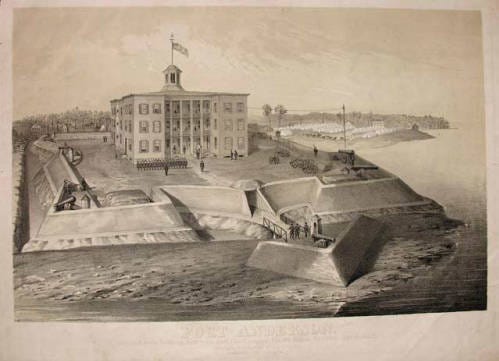
Would you feed and treat an enemy soldier? How would you feel about feeding and caring for someone who fought for your enslavement?
A slave city converted to a massive Union hospital
Paducah, Kentucky, in McCracken County, is in Western Kentucky, bordering Illinois, Missouri, and Tennessee. The town was built around slaveholding. McCracken County had nearly 400 slaveholders and approximately 1700 slaves in 1861. It was a major port city built by slaveholders for moving crops and slaves via the river system.
General Ulysses Grant occupied Paducah in September 1861 and seized control of the city and the U.S. Marine Hospital. Paducah was strategic because of its location on the Tennessee, Ohio, and Mississippi Rivers and its established ports. After the Union gained control, the city became both a supply line and a medical site.
The new reality was volatile. A slaveholding town was now under Union command. Slaves from both Paducah and surrounding counties escaped and ran to Union lines for freedom and protection. The Union provided protection, food, and shelter, and in exchange required their help in the war effort in Paducah.
Providing care for the enemy
The U.S. Marine Hospital in Paducah quickly became overwhelmed by the massive influx of wounded. The wounded and sick needed rapid transport and places to be treated.
Pews were removed from Churches to convert the sanctuaries into wards. Warehouses and government buildings were seized to care for the wounded. The Union seized and converted large homes, many owned by slaveowners, into hospitals. Some private homeowners welcomed wounded soldiers. Many untrained people fed, washed soldiers’ clothing and linens, and changed dressings.
Predictably, there was controversy beyond the Union occupation. Union soldiers and sympathizers questioned why scarce resources should be used to treat the enemy. Union military authorities ordered that all wounded, regardless of affiliation, be treated.
To codify these standards President Lincoln issued “General Orders No. 100,” often called the Lieber Code named for its author, Francis Lieber. It became a template for international codes of conduct during war.
Formerly enslaved care for wounded confederate soldiers
The logistics of handling a constant crisis meant that personnel needs took priority over sensitivities. Union authorities assigned nursing care and other ancillary work needed, even if it meant the enslaved had contact with Confederate wounded.
Confederate soldiers were kept in separate wards. Trained military nurses or white volunteers were often assigned to provide more intimate bedside care to confederate wounded. This was likely to reduce discomfort and tensions, perhaps even to prevent violence. According to Union diaries, Confederate soldiers were often heard insulting black workers. It was likely a jarring inversion to find oneself suddenly vulnerable and dependent on the very people you were fighting to keep enslaved.
The challenge of caring in contemporary healthcare
Providing relief to suffering human beings is not always a clean affair. Physicians and nurses often find themselves having to care for inmates, suspects the police have arrested, people addicted to drugs, and others. It could mean we find ourselves in a situation having to provide care and comfort to the people we most despise.
Looking beyond the hatred for enemies and to the humanity of each individual before us is challenging, sometimes seemingly impossible. Finding a way to love them for no other reason than they are human like me, flaws and all, is the key to human flourishing and peace.
Sources
For more on the topics of medicine during the Civil War, including hospital ships:
Western Sanitary Commission. Report of the Western Sanitary Commission: On the White Union Refugees of the South. St. Louis: R.P. Studley and Co., 1864.
U.S. War Department. The War of the Rebellion: A Compilation of the Official Records of the Union and Confederate Armies (Series I, Vol. VII & X). Washington: Government Printing Office.
J. Steven Bromwich founded 1690 Media to explore the soul of healthcare. He tells the stories of heroes and villains of historical healthcare, connecting these moral lessons to modern medicine. He is a bioethicist, criminal investigator, and RN.
We definitely need more of this viewpoint in all our human interactions: to first look at the person before you as a member of the human race.