

Secret handshakes and speaking in code
The inaccessibility of the criminal justice system

By J. Steven Bromwich
Gatekeepers run the legal system. Citizens lack access except through the gatekeepers.
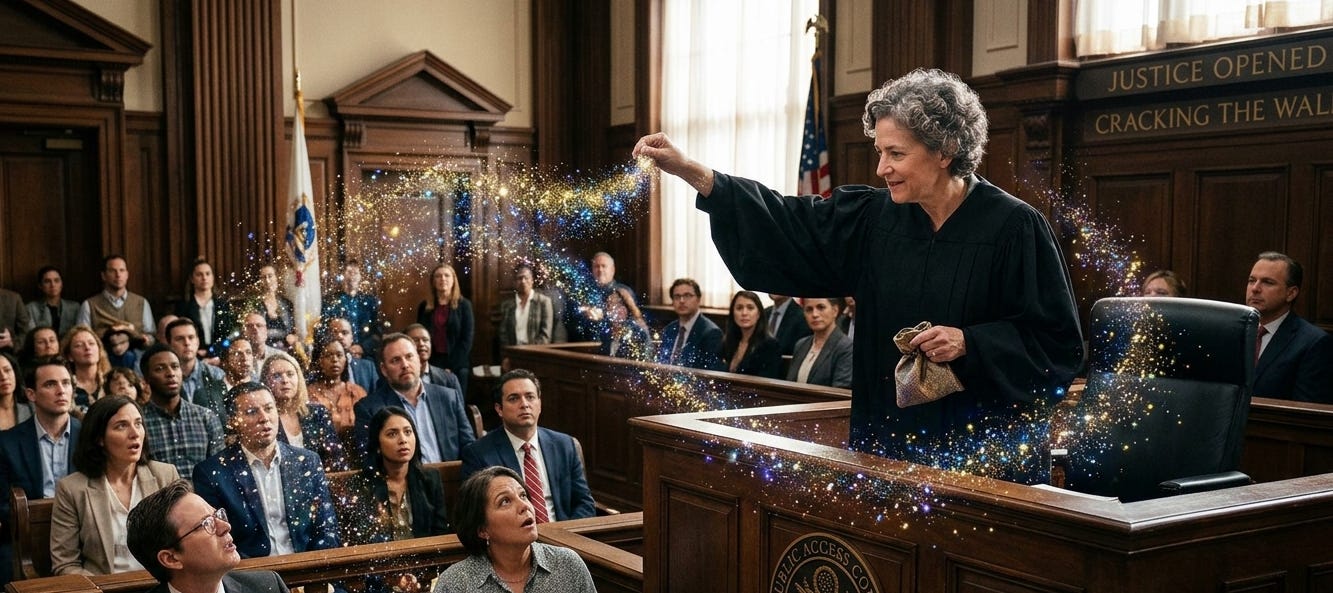
The modern labyrinth
Imagine John, a local mechanic accused of receiving stolen auto parts. John is sharp and runs a solid business, but he has no legal training. From the moment of his arrest, he enters a system designed for bureaucratic processing, not citizen participation.
John immediately confronts a procedural wall. There are multiple hearings designed for different proceedings, each with their own paperwork, deadlines, and procedural rules. There are rules of evidence, rules about who can speak in court, and others. In the courtroom, power is on vivid display and the average citizen feels completely disenfranchised.
Early in the process John wants to show the judge a receipt proving he paid for the auto parts and that these charges against him are false. The judge tells him to stop talking. Under strict rules of evidence, his receipt is “hearsay” unless he can authenticate it through a formal foundation that he does not know how to lay. When he tries to speak again, the judge warns him: “Mr. Davis, I advise you to speak only through your counsel. Anything you say on the record can and will be used against you.” John is rendered mute in his own defense.
For John, the modern system is an automated factory run by an exclusive guild. John is not a member of the guild. He is the raw material moving along a conveyor belt, entirely dependent on specialized technicians (lawyers and judges) to operate the machinery. John has a court-appointed lawyer, which is the reality for most Americans (most people cannot afford 300.00+/hour lawyers). He will rarely speak to his attorney, not because they do not care, but because public defenders are overwhelmed with at least 150 active cases, often more, at any given moment.
People charged with crimes are disenfranchised because they lack access and control over a mysterious system that decides their fate. What is frightening about this situation is that most people have accepted this gnostic system.
No access to justice
There is a need to simplify the legal process to allow average citizens access to the judicial system. There have been attempts at reform but they have failed. These attempts have been mostly in the area of allowing paralegal professionals to assist clients. Even though I encourage a wholesale reform, greater access through paraprofessionals is a start.
The legal profession uses a phrase called unauthorized practice of law (UPL) to protect the profession and block anyone other than a bar licensed lawyer from assisting clients. Even explaining a legal form and how to complete it can be interpreted as UPL. The legal profession argues they are protecting citizens from harm.
Limited License Legal Technicians (LLLTs)
Washington State tried a method by which trained nonlawyer professionals assisted clients in accessing the courts. The program began in 2012, initiated by the State Supreme Court. It was successful at helping people in need of legal access.
The program was killed by lawyers in 2020. The program, it seems, was seen as a potential threat to the legal profession.
The self-governing judiciary
The judicial system governs itself. State legislatures construct laws that govern other professions, such as doctors, nurses, teachers, electricians, and the like. The legislative branch cannot govern the judiciary or legal profession. The judiciary, a different branch of government, regulates itself, including the practice of law.
There is one action a state legislature can take: punish the judiciary through its budget. In a system of checks and balances state lawmakers, who control state money, can tell the judiciary to solve its problems, or else.
Voters control who serve as legislators. If citizens want to abolish secret handshakes, coded language, lift the judicial veil, and gain more access to the courts, they need to pressure their representatives. The system needs to be fixed.
About the author
J. Steven Bromwich is a criminal defense investigator and ethicist, with advanced training in history and diplomatic studies. He writes about crime, power, and ethics to help readers navigate modern problems through historical perspective and first principles.