

Of presidents and primaries
Attempting to eliminate opposition isn't new nor party dependent

A U.S. president pressuring members of Congress to align with an agenda or face ouster has been a feature of both political parties. President Trump’s demand for loyalty from legislators of his own party is not as novel as it is sometimes portrayed. This behavior, however, has often led to unintended consequences.
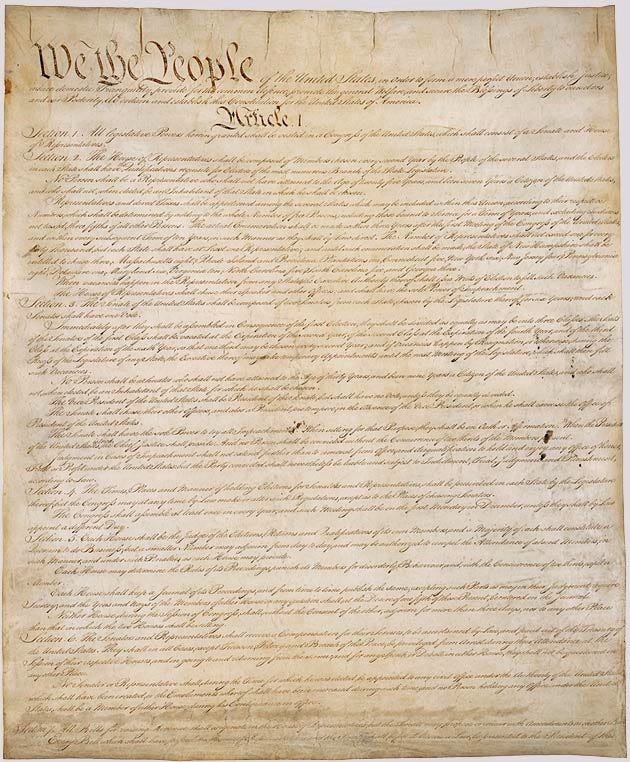
Separation of powers protects the Republic
Separation of powers is crucial to avoid tyranny. The founders of our nation articulated this principle clearly.
To achieve their agendas (or for revenge) popular presidents are often tempted to pressure members of Congress to support their agendas, including by inserting their influence in congressional and gubernatorial elections. This overreach frequently backfires.
The Chief Executive commands the military and enforces laws enacted by the legislature, among other federal and international roles. Their power is limited by both the legislative and judicial branches of government.
Members of the legislative branch represent the interests of their districts, the local citizens, in Washington, D.C. They debate and enact legislation according to the needs of the citizens they represent balanced with what is best for the nation. Their power is limited by both the Executive and Judicial branches of government.
This is obviously an oversimplification and more can be read on this topic elsewhere, including at the National Constitution Center. The critical point here is to understand that the separation of powers exists for a reason and that it is important to stay in one’s constitutional lane. This restraint helps foster a healthy Republic.
Politics and power follow a pattern
In 1938 Franklin D. Roosevelt was frustrated with conservative Democrats, mainly Southern Democrats. They were opposing too much of his later New Deal legislation. He sought to politically eliminate this opposition. He wanted loyalists in Congress.
FDR did something almost unprecedented at the time. He hit the campaign trail, actively campaigning against representatives and senators across the nation who had opposed him. The media at the time called FDR’s efforts “The Great Purge.”
It backfired. Voters resented his interference in local politics. Nearly all those he campaigned against were re-elected.
Andrew Jackson, beginning in 1829, employed a “spoils systems,” whereas loyalist to his agenda were rewarded with federal jobs and money. This is not so uncommon today.
Abraham Lincoln not only demanded total loyalty from republicans during the Civil War, he enforced it through arrests of political dissidents, including from the opposing party. He wanted unity in the war effort.
Most notably, Lincoln had Ohio Democratic Congressman Clement Vallandigham arrested for opposing the Civil War. In the speech that led to his arrest he called the war wicked and cruel and labelled Lincoln a tyrant. He was convicted by a military tribunal. Lincoln commuted the sentence to avoid making him a political martyr, but then exiled him to the confederacy.
Lincoln also had members of the press, state legislators, and an estimated 13,000 to 38,000 citizens (experts disagree on an exact number) arrested or detained without adequate due process. Some were likely justified arrests, but the process of unilaterally suspending Constitutional rights, such as the writ of habeas corpus (the government must justify detainment before a court), was not.
Woodrow Wilson encouraged the American people to only vote for Democrats who supported WWI and his international agenda. It backfired. Republicans won both houses.
Power and party
Today, there are important differences in how party politics works. Congressional districts are less competitive due to re-drawing districts and demographic re-alignments that began in the 1960s and accelerated during the 1990s and beyond. The resulting lack of competition due to homogenous electorates reduced the electoral consequences of Executive involvement in local primary elections. Consequences may still be realized at the general election level.
Power dynamics and human nature have not changed. The demand for loyalty and attempts to defeat opposition endure. Expressing disapproval for a position or vote is expected, even necessary, but scorched earth politics, especially outside one’s lane, is injurious to a democratic republic.
Resources
https://constitutioncenter.org/
About the author
J. Steven Bromwich is a criminal investigator, ethicist, and historian. He investigates and analyzes crime, power, and morality.