

Law enforcement: the duty to protect and serve
The responsibilities and dangers involved in serving the public

J. Steven Bromwich
This newsletter focuses on power, crime, and ethics, especially in preserving liberty and human dignity. The founders of our nation cared deeply about the topic of restraining power and preserving individual liberty.
It is important to reflect on the necessary role of law enforcement in civil society. We hold the need for authority in maintaining a well-ordered republic and the need to restrain and hold that authority accountable in tension.
Facing the human condition
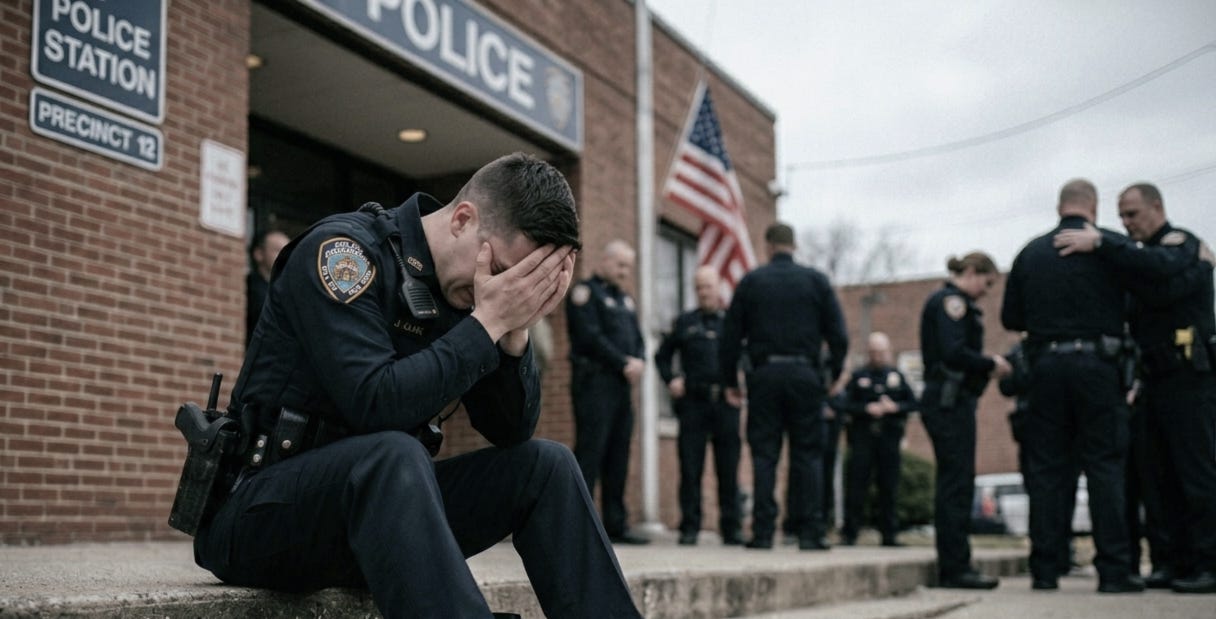
Men and women in law enforcement face danger every day. Imagine the uncertainty of every call? Imagine wondering if this is the call where you’re shot at or die?
I have never worked in law enforcement. I work as a criminal defense investigator and have watched hours of bodycam and surveillance videos, listened to interrogations and forensic interviews, read citations and medical records, examine autopsies, crime scenes, and other evidence. I have seen a lot of what officers encounter, from the “mundane” to the most violent and traumatizing situations.
Regularly encountering the dark side of human nature comes at a cost. Traumatic stress is one possibility. Becoming cynical, even hardened, toward fellow human beings could be a worst case cost. After all, compassion fatigue is real.
Processing traumatic experiences, not losing hope, and keeping perspective is essential to maintaining a deep sense of service to the community. Without an outlet, such as faith, family, or friends, police duties in the face of danger can wear a person down.
Accountability and respect
The Oath of Office for a police officer (and other public officials) in Kentucky includes the following:
“I do solemnly swear that I will support the Constitution of the United States and the Constitution of this Commonwealth, and be faithful and true to the Commonwealth of Kentucky…” (from kycourts.gov).
The Constitution of the United States (and the Commonwealth) is, in part, the framework by which we evaluate the actions of public officials and hold them accountable. An ethic rooted in the dignity of every human person must also undergird public service. We need to look at both national founding principles and ethics to evaluate the actions of law enforcement and public officials.
Coming up
On Saturday we will explore how confirmation bias unfolds in a police investigations and how it can impact justice.
About the author
J. Steven Bromwich is a criminal defense investigator and ethicist, with advanced training in history and diplomatic studies. He writes about crime, power, and ethics to help readers navigate modern problems through historical perspective and first principles.