

Crime, confirmation bias, tunnel vision, and human nature
How common biases ruin lives

By J. Steven Bromwich
[This is not legal advice]
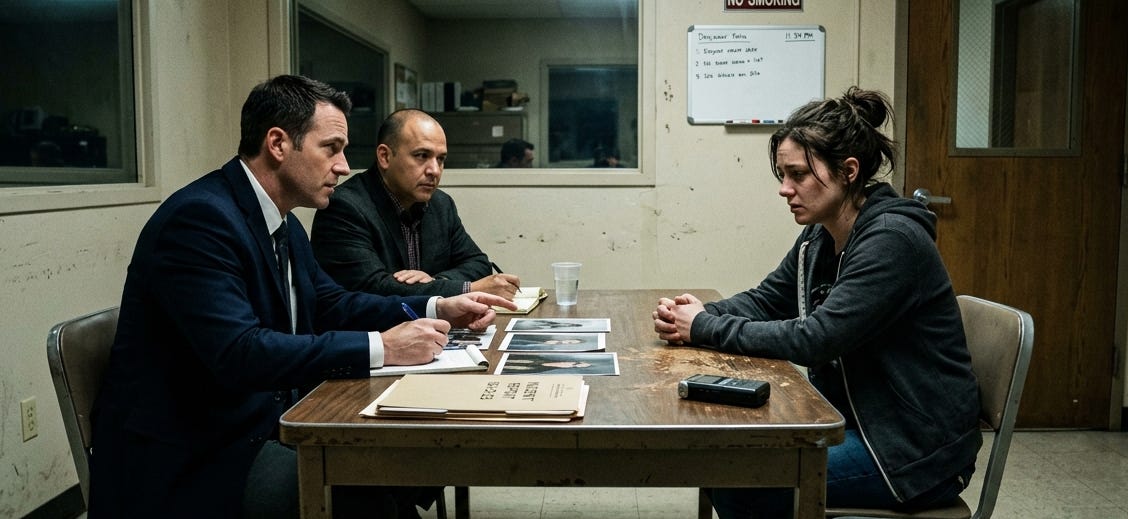
Have you ever watched a crime show and started yelling at the suspect being interrogated by the police, “Stop talking!” “Get a lawyer!” I have.
They aren’t out to get you, until they are
Discovering you are a suspect of a crime you did not commit is emotional, even panic worthy. When people panic their judgment can become impaired.
Sometimes you don’t know you are suspect. Law enforcement may lead you to believe you are a witness and helping them solve a crime. Then then proceed to elicit statements from you that will later be used in a case against you.
Innocent people are eager to convince the police of their innocence, so they talk, and talk, and talk. The police know this (they learn it in training), so they encourage it.
You are innocent of the crime, so you do what you can to clear your name. You answer their questions and tell the police where you’ve been and when, who you were with, when you got home, and the like. All good, right?
You agree to go to the police station for further questioning. After all, you are innocent and will be able to convince them of the truth. The police seem so kind.
The detectives begin probing into details about your relationship with the victim. Have you been having any problems with that person lately? Any disagreements? Fights? What about exactly? Explain that more to me. How did it make you feel? “It’s okay, you can confide in us,” they assure you. So you do.
You are arrested, but you keep talking. Surely you, an upstanding, law-abiding citizen can convince them you are innocent. But you cannot. It keeps getting worse. They are convinced you are guilty. They found their criminal.
Establishing probable cause
Probable cause for an arrest could be defined simply as (no legal jargon here) “law enforcement thinks the facts they have uncovered (many of which you revealed to them) indicate you could have committed the crime.” In other words, given the timeline, relationship problems, the fight you had with the victim, it is possible you did it.
There is a serious problem with probable cause. It is dependent on human judgment, which is flawed, sometimes atrociously so. Humans are fallible and impressionable. Facts can easily be distorted.
Confirmation bias and flawed investigations
Confirmation bias is fascinating, but frightening. We all do it. The definition is found in its name: there is a bias toward confirming what we believe, or want to believe.
Confirmation bias is a filter. It is a tendency to interpret and favor information that aligns with one’s existing beliefs.
Here is a real-life crime example (completely made up, but common).
You are a teacher and a student falsely reports you for sexual contact with her. You are interviewed by the police and you “cooperate” because you want to clear your name. You tell the police that this particular adolescent has emotional struggles, a difficult home life, that you have tried to be a good listener, and have helped her after school with course material she was not understanding.
The police ask you how often you helped her after school, or been a good listener? Were you alone with her? The student says you gave her gifts, the detectives tell you. Is this true? You think for a moment. “Yes, I once gave her a new notebook. Her family could not afford one. I also gave her a book to read that I thought might help her.”
If confirmation bias is central in this police investigation, they will interpret these answers in a way that confirms what they believe or want to believe. These beliefs can be established when investigators first interview the alleged victim, who is upset and weeping.
Investigators with this bias will see the extra time spent with the student not as something good teachers do for their students, but as grooming behavior. They will see the extra notebook and an encouraging book not as charity but as manipulation and more grooming. Investigators will intepret your comment about the student’s emotional issues as a discrediting tactic. All of these support preconceived beliefs about the allegation, both on the micro and the macro level.
Tunnel vision and the distortion of truth
Tunnel vision is an overly narrow focus where law enforcement stops looking for new facts or dismisses exonerating evidence that does not support an existing theory. We can see how this works using the same scenario of the accused teacher.
Detectives are told by other teachers that the girl has a lot of needs and tends to cling to adult figures. When these adults do not respond the way she wants or pull back she becomes upset, even vindictive. She once accused another teacher of calling her a vulgar name, which other students confirmed was untrue. The principal tells the detectives that the student has a tendency to lie. Detectives never talk to the parents.
Detectives with tunnel vision may ignore the fact that the alleged victim lies, has made a false accusation before, has emotional struggles and behaviors that could exonerate the teacher because these facts do not align with an existing belief of what likely happened. In fact, investigators will often not ask questions that may contradict their conclusions.
Human nature and self-awareness
An important take-away for law enforcement and citizens is confronting the reality of human nature. We are all flawed.
We tend to cling to certain beliefs and ways of looking at the world, of theories of how the world works, and what “those people” are like. We might be wrong, but it doesn’t stop us from cherry picking facts to confirm our biased beliefs or ignoring facts that contradict our theories.
Confirmation bias and tunnel vision can ruin relationships, reputations, distort truth, and keep us stuck in a spin cycle of falsehood. It may also cost people their freedom. Slowing down, sitting with ourselves in silence, and engaging in an honest self-examination helps. We might even need to realign certain ways of looking at ourselves and the world.
About the author
J. Steven Bromwich is a criminal defense investigator and ethicist, with advanced training in history and diplomatic studies. He writes about crime, power, and ethics to help readers navigate modern problems through historical perspective and first principles.